
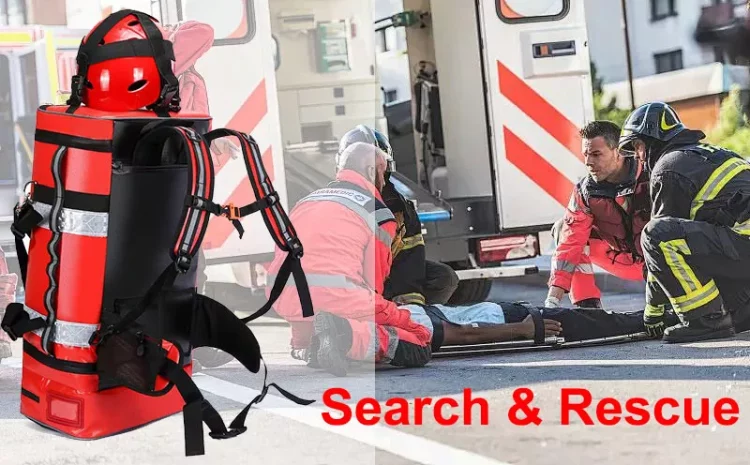
Search and rescue (SAR) operations place firefighters in some of the most unpredictable and dangerous environments they will ever face. From collapsed buildings and confined spaces to unstable terrain and low-visibility conditions, SAR missions demand not only advanced technical skills but also immediate medical readiness.
In these high-risk scenarios, firefighter first aid kits for search and rescue operations are a critical piece of operational equipment. Unlike standard fireground first aid kits, SAR-focused kits must support trauma care in remote, confined, or extended operations where access to emergency medical services may be delayed. This article explores the real-world medical needs of firefighter search and rescue operations and explains how the right equipment choices can improve safety, response effectiveness, and patient outcomes.
Understanding the Search and Rescue Environment
Search and rescue operations differ significantly from routine fire suppression or emergency response calls. Firefighters involved in SAR missions often operate in environments that are unstable, unfamiliar, and constantly changing.
Common SAR environments include:
-
Structural collapse sites
-
Confined spaces such as tunnels, basements, or voids
-
Industrial facilities and infrastructure failures
-
Disaster zones following earthquakes, explosions, or storms
These environments create unique medical challenges. Firefighters may need to provide medical care while navigating debris, working in tight spaces, or remaining in place for extended periods. As a result, first aid kits designed for search and rescue must prioritize mobility, durability, and trauma-focused care.
Common Injuries in Firefighter Search and Rescue Operations
The types of injuries encountered during search and rescue missions are often more severe and complex than those seen in standard emergency responses.
Crush and Entrapment Injuries
Collapsed structures and heavy debris can trap both civilians and rescuers. These situations frequently result in crush injuries that require immediate stabilization before safe extrication.
Lacerations and Puncture Wounds
Sharp metal, broken concrete, shattered glass, and exposed rebar are common hazards. Deep cuts and puncture wounds can cause serious bleeding if not treated quickly.
Heavy Bleeding and Trauma
Uncontrolled bleeding is one of the most urgent medical threats in SAR operations. Firefighters must be equipped to control hemorrhage under challenging conditions.
Hypothermia and Exposure
Search and rescue missions may last for hours or days, particularly in disaster scenarios. Exposure to cold, wind, rain, or water can lead to hypothermia, even in non-winter environments.
Respiratory Distress
Dust, smoke, and airborne contaminants are common in collapse and confined-space rescues. These conditions can cause breathing difficulties for both victims and rescuers.
These injury patterns explain why SAR operations require specialized firefighter first aid kits rather than basic or general-purpose kits.
Medical Priorities During Search and Rescue Missions
In search and rescue scenarios, medical priorities are shaped by environmental constraints and operational realities. Firefighters may need to provide care before a patient can be fully accessed or removed from danger.
Key medical priorities include:
-
Immediate bleeding control to prevent life-threatening blood loss
-
Stabilization of injuries prior to movement or extrication
-
Management of shock and exposure during prolonged operations
-
Care for both victims and injured firefighters
Because advanced medical support may not be immediately available, SAR-focused firefighter first aid kits must support effective early intervention.
Essential Features of Firefighter First Aid Kits for Search and Rescue
The design of a firefighter first aid kit for search and rescue operations is just as important as its contents. Kits must function reliably in extreme conditions.
Compact and Lightweight Design
SAR operations often require firefighters to carry equipment through tight or unstable areas. First aid kits must be compact and lightweight without sacrificing critical medical capability.
One-Handed and Glove-Friendly Access
Firefighters may need to access medical supplies while wearing gloves or using one hand. Zippers, compartments, and closures should be easy to operate under stress.
High Visibility and Easy Identification
Low-light or debris-filled environments make visibility a challenge. High-visibility colors and clear organization help firefighters quickly locate supplies.
Durable Construction
Search and rescue kits must withstand abrasion, moisture, dust, and rough handling. Durable materials ensure reliability throughout the mission.
Organized, Modular Layout
A logical layout allows firefighters to access critical supplies quickly without unnecessary searching, which is essential when time and space are limited.
Recommended Medical Equipment for SAR-Specific Firefighter First Aid Kits
The contents of a search and rescue firefighter first aid kit should reflect real operational needs rather than generic first aid assumptions.
Trauma and Bleeding Control Supplies
These items are essential for managing severe injuries:
-
Trauma bandages
-
Compression bandages
-
Sterile gauze for wound packing
Burn and Wound Care Supplies
While SAR missions may not always involve active fires, burn injuries can still occur:
-
Burn dressings
-
Non-adherent wound coverings
-
Antiseptic wound care items
Exposure and Shock Management
Extended rescue operations increase the risk of shock and exposure:
-
Emergency blankets
-
Insulating materials
Personal Protective and Support Items
Supporting responder safety and treatment effectiveness:
-
Disposable medical gloves
-
Trauma shears for clothing or gear removal
The exact contents may vary depending on mission type, but all SAR kits should emphasize trauma care, bleeding control, and patient stabilization.
Firefighter First Aid Kit Placement During Search and Rescue Missions
In search and rescue operations, accessibility is critical. A first aid kit that cannot be reached when needed provides no benefit.
Firefighters typically carry or stage SAR first aid kits:
-
On their person during entry and search operations
-
At access points or staging areas
-
Near extrication routes
Teams must ensure that kits remain accessible even as conditions change. Clear procedures for kit placement and hand-off between team members help maintain medical readiness throughout the mission.
Choosing the Right Firefighter First Aid Kit for SAR Teams
Selecting a first aid kit for search and rescue teams requires careful evaluation of operational requirements.
Team Size and Role
Larger SAR teams or task forces may require multiple kits to ensure coverage across different areas of the operation.
Mission Type
Different rescue scenarios—such as structural collapse, confined space rescue, or disaster response—may require variations in kit contents or size.
Weight vs Medical Capability
SAR kits must balance portability with sufficient medical supplies. Overloaded kits can hinder movement, while under-equipped kits limit response capability.
Standardization and Training
Standardized kit layouts improve training efficiency and reduce confusion during emergencies. Firefighters should be familiar with the contents and organization of their SAR kits.
Compliance, Training, and Kit Maintenance in SAR Operations
Medical preparedness does not end with kit selection. Ongoing training and maintenance are essential to ensure readiness.
Consistent Layout for Training
Using standardized kit configurations allows firefighters to develop muscle memory, improving response speed under stress.
Regular Inspection and Replenishment
SAR first aid kits should be inspected regularly to:
-
Replace used or expired items
-
Ensure contents are complete and undamaged
-
Confirm readiness before deployment
Alignment with SAR Protocols
First aid kits should support established search and rescue medical protocols, ensuring seamless integration into operational procedures.
Frequently Asked Questions (FAQ)
What makes a firefighter first aid kit suitable for search and rescue operations?
A SAR-suitable firefighter first aid kit is compact, durable, and trauma-focused, with supplies designed for bleeding control, injury stabilization, and exposure management in challenging environments.
How are search and rescue first aid kits different from standard firefighter kits?
Search and rescue kits prioritize portability, modular organization, and prolonged care considerations, while standard fireground kits often focus on vehicle-based or station-based use.
Can firefighter first aid kits be customized for different SAR scenarios?
Yes. SAR kits can be configured to match specific mission types, such as structural collapse or confined space rescue, ensuring appropriate medical coverage.
How often should SAR firefighter first aid kits be inspected?
SAR first aid kits should be inspected regularly—often monthly or after each deployment—to ensure all contents are present, functional, and within expiration dates.
Final Thoughts
Search and rescue operations place extraordinary demands on firefighters, requiring them to operate in hazardous environments while providing immediate medical care under difficult conditions. A well-designed firefighter first aid kit for search and rescue operations is a critical tool that supports trauma management, bleeding control, and patient stabilization when time and access are limited.
By understanding real-world SAR risks, prioritizing the right medical equipment, and maintaining consistent training and maintenance practices, fire departments can significantly enhance safety and effectiveness during search and rescue missions.