
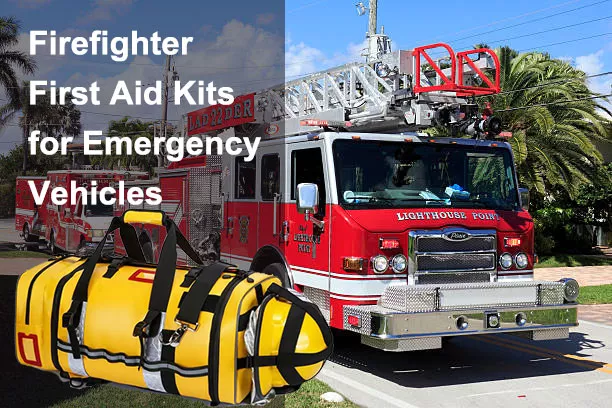
Emergency vehicles are the backbone of fire service operations. Fire engines, ladder trucks, and rescue vehicles respond at high speed to unpredictable, high-risk situations where injuries can occur at any moment—during transit, on arrival, or throughout incident operations. In these environments, having the right firefighter first aid kits for emergency vehicles is essential.
Unlike standard first aid kits, vehicle-based firefighter kits must be compact, securely stored, trauma-focused, and immediately accessible. This article explains why dedicated firefighter first aid kits are critical for emergency vehicles, what medical scenarios they must address, what supplies they should include, and how fire departments can choose the right vehicle-kit solutions for their fleets.
Why Emergency Vehicles Require Dedicated Firefighter First Aid Kits
Emergency vehicles operate under conditions that demand specialized medical preparedness. Fire trucks and rescue units are often the first to arrive at an incident, sometimes well before ambulances or advanced medical support.
Firefighter first aid kits for emergency vehicles are necessary because:
-
Firefighters may be injured during response, not just on the fireground
-
Vehicle accidents involving emergency vehicles can cause serious trauma
-
Fire crews frequently provide initial medical care to civilians
-
Space, vibration, and movement inside vehicles require secure, organized kits
Standard consumer first aid kits are not designed for these challenges. A firefighter vehicle first aid kit must support rapid trauma response while remaining durable and easy to deploy inside a moving or crowded emergency vehicle.
Common Medical Scenarios Involving Emergency Vehicles
To understand why specialized vehicle kits matter, it’s important to look at how they are actually used.
Firefighter Injuries During Response
Emergency vehicle operations involve high speeds, adverse weather, and complex traffic conditions. Sudden stops, collisions, or falls while exiting vehicles can result in injuries that require immediate care.
Civilian Injuries Before EMS Arrival
Fire trucks often arrive at scenes involving traffic accidents, industrial incidents, or residential emergencies before ambulances. Firefighters rely on vehicle-based first aid kits to stabilize victims until EMS arrives.
Multi-Casualty Incidents
In large-scale emergencies, emergency vehicles may serve as mobile treatment points, making onboard first aid kits essential for managing multiple injuries.
These scenarios highlight why firefighter first aid kits for emergency vehicles must be more than basic compliance items—they must be operational tools.
Key Features of Firefighter First Aid Kits for Emergency Vehicles
A well-designed emergency vehicle first aid kit balances compact storage, trauma capability, and speed of access.
Compact Size and Secure Mounting
Emergency vehicles have limited space. Vehicle kits must:
-
Fit into compartments or wall mounts
-
Remain secure during movement and vibration
-
Be easy to remove when needed on scene
Trauma-Focused Medical Contents
Vehicle kits should prioritize:
-
Bleeding control
-
Burn treatment
-
Injury stabilization
This ensures firefighters can respond to serious injuries immediately.
Quick-Access Organization
In emergencies, firefighters cannot search through cluttered bags. Kits must feature:
-
Clearly organized compartments
-
Easy-open zippers or flaps
-
Logical placement of critical supplies
Durable Construction
Firefighter first aid kits for emergency vehicles must withstand:
-
Heat and cold
-
Moisture and dust
-
Repeated use in demanding environments
Recommended Contents for Firefighter First Aid Kits in Emergency Vehicles
The contents of a firefighter vehicle first aid kit should reflect real operational risks rather than generic first aid assumptions.
Trauma and Bleeding Control Supplies
These items are critical for preventing life-threatening blood loss:
-
Trauma bandages
-
Compression bandages
-
Sterile gauze pads and rolls
Burn Care Supplies
Emergency vehicles responding to fires must carry burn treatment essentials:
-
Burn dressings
-
Burn gel packets
-
Non-adherent wound coverings
Emergency Tools and PPE
To support safe and effective treatment:
-
Disposable medical gloves
-
Trauma shears
-
Emergency blankets for shock prevention
Supporting Medical Items
Depending on department policy, kits may also include:
-
Basic airway support items
-
Eye wash or saline
-
Cold packs
Vehicle-Mounted vs Portable Firefighter First Aid Kits
Fire departments typically choose between vehicle-mounted kits, portable kits, or a combination of both.
Vehicle-Mounted Firefighter First Aid Kits
These kits are:
-
Stored permanently in the vehicle
-
Ideal for quick access during response
-
Designed for consistent placement across fleets
Portable Firefighter First Aid Kits
Portable kits, such as backpacks or grab bags:
-
Can be carried away from the vehicle
-
Support extended operations
-
Are ideal for rescue or multi-casualty incidents
Many departments choose a hybrid approach, using both mounted and portable kits to ensure flexibility.
How Fire Departments Choose the Right Emergency Vehicle First Aid Kits
Selecting the right firefighter first aid kits for emergency vehicles requires careful evaluation.
Consider the Vehicle Type
Different vehicles have different needs:
-
Fire engines
-
Ladder trucks
-
Rescue units
-
Command vehicles
Each may require different kit sizes or contents.
Assess Crew Size and Risk Profile
Larger crews and higher-risk operations may require more comprehensive kits.
Standardization Across the Fleet
Standardized kits improve:
-
Training efficiency
-
Inventory management
-
Emergency response consistency
OEM Customization Options
OEM firefighter first aid kits allow departments to:
-
Customize contents
-
Select specific bag designs
-
Add private label branding
-
Meet internal or regional standards
OEM Firefighter First Aid Kits for Emergency Vehicles
OEM firefighter first aid kits are especially valuable for departments equipping multiple emergency vehicles. OEM solutions allow for:
-
Bulk purchasing at predictable cost
-
Customized medical contents for vehicle use
-
Consistent layout across all vehicles
-
Department branding or private labeling
OEM kits ensure every vehicle in the fleet is prepared with the same professional-grade medical equipment.
Firefighter First Aid Kits for Emergency Vehicles
TICAREFAK specializes in professional firefighter first aid kits designed for real-world emergency operations. Our firefighter first aid kits for emergency vehicles are built to support trauma care, rapid access, and durability in demanding environments.
We offer:
-
Vehicle-mounted firefighter first aid kits
-
Portable firefighter trauma kits
-
OEM and private label customization
-
Bulk supply for fire departments and distributors
Our solutions help departments standardize medical preparedness across their fleets while meeting operational requirements.
Frequently Asked Questions (FAQ)
What first aid kit should be carried in a fire truck?
Fire trucks should carry firefighter first aid kits designed for emergency vehicle use, with trauma-focused contents, burn care supplies, and secure storage suitable for vehicle environments.
Are firefighter first aid kits required in emergency vehicles?
Requirements vary by region, but most fire departments equip emergency vehicles with dedicated first aid kits to ensure immediate medical response capability.
Can emergency vehicle first aid kits be customized?
Yes. OEM firefighter first aid kits can be customized for contents, bag design, size, and branding to meet departmental needs.
How often should firefighter first aid kits in vehicles be checked?
Vehicle first aid kits should be inspected regularly—often monthly—to ensure contents are complete, undamaged, and within expiration dates.
Final Thoughts
Emergency vehicles are often the first medical response on scene. Equipping them with professional firefighter first aid kits designed for emergency vehicles ensures firefighters can respond quickly and effectively to injuries involving both crew members and civilians.
With the right kit design, contents, and OEM customization, fire departments can significantly improve on-scene medical readiness and operational safety.