
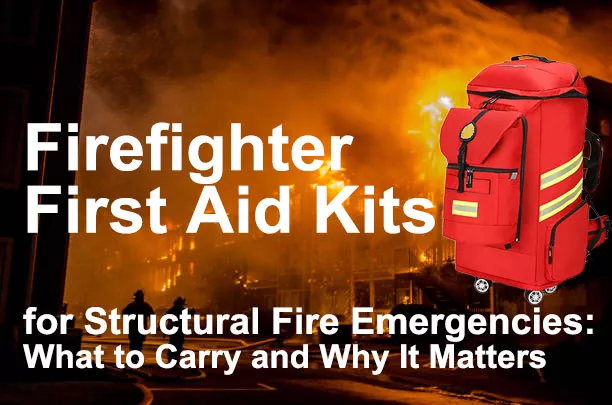
Structural fire emergencies are among the most dangerous environments firefighters face. Extreme heat, dense smoke, collapsing structures, sharp debris, and limited visibility combine to create a constant risk of injury. In these conditions, immediate access to proper medical supplies is not optional—it is critical.
A firefighter first aid kit designed for structural fire emergencies plays a vital role in protecting firefighters and supporting rapid on-scene medical care. Unlike standard consumer first aid kits, firefighter kits must be trauma-focused, durable, and easy to deploy in high-stress situations. This article explains why specialized firefighter first aid kits are essential for structural fires, what injuries they must address, what supplies they should include, and how fire departments can choose the right solution for their operations.
Why Structural Fire Emergencies Require Specialized Firefighter First Aid Kits
Structural fires expose firefighters to risks that ordinary emergency scenarios do not. While standard first aid kits may be suitable for minor injuries, they are not designed for the realities of fireground operations.
During structural fire response, firefighters face:
-
Extreme heat and burn hazards from flames, hot surfaces, and steam
-
Falling debris and structural collapse, leading to blunt force trauma
-
Sharp materials such as glass, metal, and wood fragments
-
Smoke inhalation and respiratory distress
-
Delayed access to EMS, especially during active fire suppression
In these environments, injuries can escalate rapidly. A firefighter first aid kit must support immediate trauma care, stabilize injuries, and buy time until advanced medical support becomes available. This is why firefighter first aid kits for structural fire emergencies are designed with a different purpose and content structure than general first aid kits.
Common Injuries During Structural Fire Response
Understanding the types of injuries that occur during structural fire emergencies helps explain why specialized firefighter first aid kits are necessary.
Burns and Heat-Related Injuries
Firefighters frequently experience burns caused by direct flame exposure, hot surfaces, steam, or radiant heat. Even with protective gear, exposed skin areas and accidental contact can result in burn injuries requiring immediate treatment.
Lacerations and Puncture Wounds
Broken glass, sharp metal, nails, and splintered wood are common in structural fires. These hazards can cause deep cuts and puncture wounds that may lead to heavy bleeding if not treated quickly.
Blunt Force Trauma and Crush Injuries
Structural collapse, falling objects, or sudden impacts can cause serious trauma, including fractures and internal injuries. Stabilizing these injuries on the fireground is essential before evacuation.
Smoke Inhalation and Respiratory Issues
Dense smoke and toxic gases can lead to breathing difficulties, dizziness, and loss of consciousness. While firefighter first aid kits do not replace respiratory equipment, they can support immediate response to related symptoms.
Because these injuries often occur simultaneously, firefighter first aid kits must be trauma-focused and comprehensive, not limited to basic wound care.
What Should a Firefighter First Aid Kit Include for Structural Fires?
This is the most critical question for fire departments and procurement teams. A firefighter first aid kit for structural fire emergencies should prioritize trauma management, bleeding control, burn care, and rapid deployment.
Trauma and Bleeding Control Supplies
Uncontrolled bleeding is one of the leading causes of preventable death in emergency situations. Firefighter first aid kits must include supplies designed for rapid bleeding control, such as:
-
Trauma bandages and compression bandages
-
Sterile gauze pads and rolls
-
Elastic bandages for wound stabilization
These supplies allow firefighters to quickly treat serious wounds sustained on the fireground.
Burn Treatment Supplies
Burns are unavoidable risks in structural fire response. Firefighter first aid kits should include burn-specific supplies that help reduce injury severity and prevent complications, such as:
-
Burn dressings
-
Cooling or burn gel packets
-
Non-adherent wound coverings
Immediate burn care can significantly improve outcomes before advanced treatment is available.
Emergency Tools and Personal Protective Items
In high-stress fireground environments, firefighters need tools that are easy to use with gloves and limited visibility. Essential items include:
-
Disposable medical gloves
-
Trauma shears for cutting clothing or gear
-
Emergency blankets for shock management
These tools support safe and effective first aid application during emergencies.
Durable and Fire-Ready Storage
The bag or container is just as important as the contents. Firefighter first aid kits for structural fires should feature:
-
Durable materials suitable for harsh environments
-
High-visibility colors or reflective strips for quick identification
-
Compact, organized layouts for fast access
Kits may be carried in backpacks, mounted in vehicles, or stored at strategic points within fire stations and response units.
Firefighter First Aid Kits vs Standard First Aid Kits
One common mistake is assuming that a standard first aid kit is sufficient for fireground use. While general kits are useful for minor injuries, they fall short in structural fire emergencies.
Key differences include:
-
Trauma focus: Firefighter kits prioritize serious injuries, while standard kits focus on minor cuts and scrapes.
-
Durability: Firefighter kits are built for harsh environments; consumer kits are not.
-
Deployment speed: Firefighter kits are designed for rapid access under stress.
-
Content depth: Firefighter kits include specialized trauma and burn care supplies.
For structural fire emergencies, using a standard first aid kit increases risk and reduces response effectiveness.
How Firefighter First Aid Kits Are Used on the Fireground
Firefighter first aid kits are not just backup equipment—they are actively used during operations.
Immediate Care for Injured Firefighters
If a firefighter is injured during suppression or rescue, crew members can use the first aid kit to control bleeding, treat burns, and stabilize the injury before evacuation.
Supporting Rescue Victims
Firefighter first aid kits are also used to provide initial medical care to civilians rescued from burning structures, helping stabilize them until EMS arrives.
Bridging the Gap to Advanced Care
In many structural fire scenarios, EMS access is delayed due to active fire conditions. Firefighter first aid kits provide critical care during this gap, improving survival and recovery outcomes.
Choosing the Right Firefighter First Aid Kit for Structural Fire Emergencies
Selecting the right firefighter first aid kit requires careful consideration of operational needs. Fire departments and safety managers should evaluate kits based on the following criteria.
Designed Specifically for Firefighters
Choose kits developed for firefighting and rescue use, not general consumer kits repurposed for emergencies.
Trauma-Focused Contents
Ensure the kit emphasizes trauma care, bleeding control, and burn treatment rather than basic first aid only.
Durable Construction
The kit should withstand heat, moisture, rough handling, and repeated use in demanding environments.
Suitable Carry Options
Depending on operations, kits may be stored in fire engines, carried as backpacks, or positioned at fire stations for rapid deployment.
OEM Customization Options
Many fire departments benefit from OEM firefighter first aid kits, which allow customization of contents, bag design, and branding to match departmental requirements.
OEM Firefighter First Aid Kits for Structural Fire Operations
OEM firefighter first aid kits are increasingly popular with fire departments and distributors. OEM solutions allow buyers to tailor kits to real operational needs rather than relying on generic configurations.
OEM customization options may include:
-
Adjusting medical contents based on structural fire risks
-
Selecting specific bag types or sizes
-
Adding department logos or private label branding
-
Meeting regional or organizational safety standards
For departments equipping multiple vehicles or teams, OEM firefighter first aid kits provide consistency, scalability, and cost efficiency.
Firefighter First Aid Kits for Structural Fires from Ticare First Aid
As an experienced first aid kit manufacturer, Ticare First Aid provides professional firefighter first aid kits designed specifically for structural fire emergencies. Our solutions focus on trauma care, durability, and rapid deployment in high-risk environments.
We support:
-
Firefighter trauma first aid kits
-
Firefighter first aid backpacks and vehicle kits
-
OEM and private label firefighter first aid kits
-
Bulk supply for fire departments and distributors
Our OEM capabilities allow departments to customize kits based on operational needs, ensuring reliable medical support during structural fire response.
Frequently Asked Questions About Firefighter First Aid Kits for Structural Fire Emergencies
Why are standard first aid kits not suitable for structural fire emergencies?
Standard first aid kits are designed for minor injuries and everyday use. Structural fire emergencies involve severe trauma, burns, and hazardous conditions that require specialized firefighter first aid kits with advanced medical supplies and durable construction.
What is the most important feature of a firefighter first aid kit for structural fires?
The most important feature is a trauma-focused design, including bleeding control and burn treatment supplies, combined with rapid accessibility in high-stress environments.
Where should firefighter first aid kits be stored during structural fire response?
Firefighter first aid kits are commonly stored in fire engines, rescue vehicles, carried in backpacks, or placed at fire stations for immediate access during deployment.
Can firefighter first aid kits be customized for specific departments?
Yes. OEM firefighter first aid kits can be customized in terms of contents, bag type, size, and branding to meet departmental requirements and operational scenarios.
Are firefighter first aid kits used only for firefighters?
No. In structural fire emergencies, firefighter first aid kits are also used to provide immediate medical care to rescued civilians before EMS arrives.
Final Thoughts
Structural fire emergencies demand more than basic medical preparedness. Firefighters operate in some of the most dangerous conditions imaginable, and their safety depends on having the right tools at the right time. A firefighter first aid kit designed for structural fire emergencies is a critical component of fireground readiness, supporting trauma care, burn treatment, and rapid response when seconds matter.
By understanding the risks, choosing the right kit, and considering OEM customization options, fire departments can significantly improve emergency medical response and protect those who protect others.