
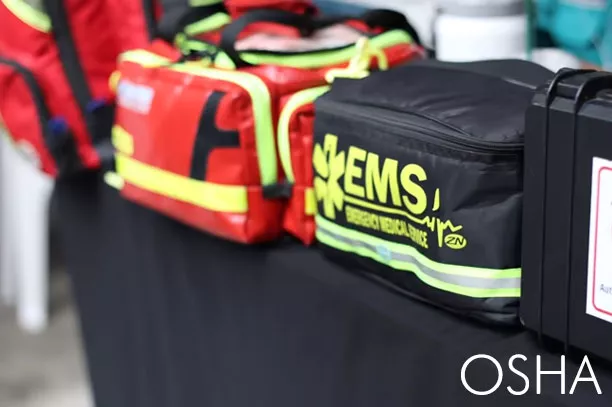
OSHA trauma kit requirements are often misunderstood because compliance depends on workplace risk, not a universal checklist. This guide simplifies OSHA standards, explains when trauma kits are necessary, highlights essential components, and helps OEM, ODM, and public safety buyers make smarter procurement decisions while avoiding costly compliance mistakes.
Why OSHA Trauma Kit Rules Feel More Complicated Than They Should
For many organizations, OSHA trauma kit requirements feel like navigating a labyrinth with moving walls. Regulations appear straightforward at first glance, yet uncertainty quickly emerges when businesses attempt to convert broad safety language into practical purchasing decisions. The complexity does not arise solely from OSHA itself. It often stems from assumptions, industry folklore, and the tendency to seek a universal checklist for environments that are anything but universal. Public safety agencies, procurement teams, and OEM partners frequently discover that compliance is less about finding one perfect kit and more about aligning preparedness with actual risk exposure.
The biggest myths businesses believe about OSHA requirements
One of the most persistent misconceptions is that OSHA provides a rigid, one-size-fits-all trauma kit inventory. Many organizations assume there is a standardized shopping list that guarantees compliance. Others believe a basic first aid kit automatically satisfies all requirements. In reality, OSHA often focuses on workplace hazards and response readiness rather than prescribing identical equipment for every environment.
Why first aid kits and trauma kits are often misunderstood
The distinction between first aid kits and trauma kits frequently becomes obscured. They may appear similar at a cursory glance, but their purposes diverge significantly. Traditional first aid kits are generally designed for commonplace incidents such as cuts, abrasions, or minor injuries. Trauma kits occupy an entirely different echelon. They are engineered for severe emergencies where rapid hemorrhage control and immediate intervention become paramount.
This semantic overlap creates confusion. Businesses see medical supplies and assume all kits perform the same function. The reality is far more nuanced.
How confusion creates compliance risks and safety gaps
Misinterpretation often generates a domino effect of operational vulnerabilities. Procurement teams may acquire kits that appear comprehensive but lack mission-critical components. A workplace handling elevated risks might rely on supplies designed for low-severity incidents. The discrepancy remains invisible until an emergency exposes the deficiency.
Safety gaps rarely announce themselves. They accumulate quietly through assumptions, outdated purchasing habits, and incomplete hazard assessments. By the time compliance issues surface, corrective action becomes substantially more expensive.
What public safety buyers and OEM partners need to know upfront
Public safety procurement requires a strategic perspective from the outset. Compliance should not begin with products. It should begin with environmental analysis and operational realities. OEM and ODM partners serving public safety sectors must understand that customization is no longer a luxury feature; it has become a practical necessity.
The most resilient trauma kit strategies emerge when suppliers and buyers examine response scenarios before discussing inventory lists. Risk first. Products second. That sequence changes everything.
What OSHA Actually Says About Trauma Kit Requirements
OSHA discussions often become clouded by legal jargon, fragmented interpretations, and industry hearsay. The result is a peculiar paradox: organizations spend enormous effort pursuing compliance while remaining uncertain about what regulations genuinely require. Trauma kits sit at the center of this ambiguity. Many businesses search for a definitive inventory list only to discover that OSHA approaches workplace safety through a broader and more adaptive framework. Understanding the language beneath the regulations transforms confusion into clarity.
Breaking Down OSHA Standards in Plain English
OSHA standards are not designed as retail shopping guides. They are safety frameworks intended to ensure that employers provide a workplace equipped to address foreseeable hazards. This distinction matters.
Rather than prescribing a singular trauma kit composition, OSHA generally requires employers to make adequate medical and first aid resources available based on workplace conditions. The operative principle is preparedness. If injuries could occur and immediate medical care is not readily accessible, employers may need appropriate first aid supplies and trained personnel.
The language can feel abstruse because regulations prioritize outcomes over itemized instructions. Instead of saying every workplace must contain a specific number of tourniquets or trauma dressings, OSHA asks a more fundamental question: can your environment respond effectively when an emergency unfolds?
Viewed through that lens, the regulations become less cryptic and considerably more practical.
Understanding OSHA Regulations Versus Recommendations
One of the most overlooked distinctions in workplace safety involves the difference between enforceable regulations and advisory recommendations. These categories are often conflated, creating unnecessary complexity.
Regulations carry legal weight. They establish mandatory obligations employers must satisfy. Recommendations, however, serve as guidance intended to strengthen preparedness beyond minimum standards.
Industry organizations, emergency response groups, and public safety experts frequently advocate for enhanced trauma capabilities such as advanced bleeding control equipment. While these recommendations may not appear as direct OSHA mandates, they often reflect emerging best practices.
Understanding this demarcation prevents businesses from making procurement decisions based solely on assumptions or incomplete interpretations.
When OSHA Requires Medical Supplies in the Workplace
Medical supply requirements are largely influenced by circumstance. Context becomes the governing variable.
If a workplace is located near clinics, hospitals, or emergency services capable of delivering rapid treatment, basic first aid resources may satisfy operational needs. Yet environments where immediate care is not easily accessible often require a more robust response infrastructure.
Construction zones, manufacturing facilities, public safety operations, and industrial sites frequently present elevated injury potential. Heavy equipment, hazardous materials, and kinetic environments introduce variables that cannot be ignored.
OSHA recognizes this reality. The expectation is not universal uniformity. It is proportional preparedness calibrated to genuine workplace conditions.
The Role of Workplace Hazards in Determining Kit Needs
Hazards create the blueprint for trauma readiness. Every workplace possesses its own risk topography, a distinctive constellation of potential threats shaped by activities, equipment, and environmental conditions.
An office environment and a public safety deployment site inhabit entirely different risk universes. One may primarily anticipate minor incidents. The other confronts the possibility of catastrophic injuries requiring immediate intervention.
This is why hazard assessments carry such strategic importance. They reveal exposure points, identify vulnerabilities, and illuminate supply requirements with greater precision. Trauma kit planning becomes less about arbitrary checklists and more about operational realism.
The strongest preparedness strategies emerge when organizations stop asking what every workplace needs and start asking what their workplace may actually face.
The Hidden Rule Most Buyers Miss Risk Assessment Drives Everything
Beneath the surface of workplace compliance exists a governing principle that quietly shapes every trauma preparedness decision. It rarely appears in bold type on product packaging. It is not a flashy marketing phrase. Yet it influences everything. Risk assessment sits at the epicenter of OSHA thinking, functioning as the invisible architecture behind effective trauma kit planning.
Many buyers search for certainty in the form of a universal checklist. They want definitive answers and standardized configurations. Instead, they encounter a more nuanced reality. Preparedness begins with understanding exposure, not inventory.
Why OSHA Does Not Use One Size Fits All Requirements
No two workplaces share identical operational ecosystems. A logistics warehouse, a municipal emergency response unit, and a quiet administrative office exist within entirely different spheres of risk. OSHA recognizes this distinction and avoids imposing monolithic requirements across dissimilar environments.
Rigid standardization creates blind spots. A highly specialized trauma kit designed for industrial hazards may become excessive in a low-risk office setting. Conversely, minimal supplies can prove dangerously insufficient within volatile environments. OSHA therefore emphasizes adaptability over prescription.
This flexible approach may initially feel nebulous. In practice, however, it reflects operational realism. Risks differ. Preparedness must follow suit.
How Workplace Risk Levels Shape Trauma Kit Contents
Risk profiles dictate kit architecture in much the same way blueprints determine structural design. The severity, frequency, and nature of workplace hazards influence which tools deserve priority placement.
A setting with machinery, cutting equipment, elevated work areas, or hazardous materials often demands more sophisticated intervention capabilities. Trauma dressings, tourniquets, hemostatic agents, and personal protective equipment become strategic necessities rather than optional additions.
Lower-risk environments may require fewer specialized resources. Yet even modest workplaces cannot rely on conjecture. The objective is not abundance. It is precision.
Thoughtful risk analysis transforms trauma kits from generic containers into purpose-built response instruments.
High Risk Versus Low Risk Environments Explained
High-risk workplaces typically involve kinetic activity, unpredictable variables, or heightened injury exposure. Construction sites, industrial facilities, transportation operations, and public safety deployments frequently inhabit this category.
Low-risk environments tend to involve administrative functions, desk work, and controlled conditions. Their hazard matrix is comparatively subdued.
The distinction is significant. Minor injuries and catastrophic emergencies do not occupy the same preparedness spectrum. Their response requirements diverge dramatically.
Real Examples From Public Safety and Industrial Settings
Consider a public safety response team operating during large-scale community events. Rapid intervention capabilities become indispensable. Severe lacerations, crowd incidents, and environmental hazards create an atmosphere where seconds carry tremendous consequence.
Now contrast that with a manufacturing facility filled with heavy equipment and mechanical systems. Crush injuries, amputations, and industrial accidents introduce an entirely different constellation of risks.
Both environments require trauma preparedness. Yet their equipment priorities differ. The lesson becomes unmistakably clear. Effective compliance does not begin with products on a shelf. It begins with understanding what can realistically happen when routine suddenly gives way to crisis.
Trauma Kit Essentials That Support OSHA Readiness
A trauma kit is far more than a collection of medical supplies compressed into a pouch or hard case. It is an operational asset. A carefully assembled response mechanism. When emergencies erupt, preparedness becomes measured not by quantity but by relevance and accessibility. OSHA readiness is not built through random accumulation or oversized inventories. It emerges through strategic selection of equipment aligned with realistic workplace threats.
Every component inside a trauma kit should justify its existence. Every item should serve a deliberate purpose. During critical moments, superfluous tools create friction while the right tools create momentum.
Bleeding Control Tools That Should Never Be Overlooked
Severe blood loss remains one of the most urgent medical emergencies in workplace incidents. Time compresses dramatically. Decision windows become astonishingly small.
For this reason, bleeding control equipment occupies a central role in trauma preparedness. Trauma dressings, compressed gauze, hemostatic materials, and wound packing supplies form the cornerstone of immediate intervention. These resources are designed not merely to absorb blood but to actively slow or control hemorrhaging until advanced care arrives.
Neglecting these tools creates a dangerous lacuna within emergency planning. A trauma kit without effective bleeding control capabilities resembles a fire extinguisher without suppressant material. It exists, but its practical utility becomes severely compromised.
Tourniquets Pressure Bandages and Critical Response Gear
Certain medical tools have achieved near-iconic status within emergency response circles. Tourniquets sit prominently among them.
Once misunderstood and occasionally viewed with hesitation, modern tourniquets are now widely recognized as indispensable instruments for managing life-threatening extremity bleeding. Their purpose is direct and unapologetic. Stop blood flow quickly when seconds matter.
Pressure bandages provide another critical layer of intervention. Designed to deliver sustained compression over severe wounds, these devices combine simplicity with extraordinary utility. Combined with chest seals, trauma shears, and emergency dressings, they create a multifaceted response ecosystem capable of addressing diverse injury scenarios.
Preparedness is often less dramatic than people imagine. Small tools. Rapid decisions. Significant outcomes.
PPE and Protective Items That Strengthen Preparedness
Protecting responders is as important as treating patients. This principle is frequently underestimated.
Personal protective equipment creates a barrier between aid providers and environmental hazards. Gloves, face shields, protective masks, and biohazard barriers reduce contamination risks while supporting safer intervention practices. In chaotic scenarios, these items become quiet sentinels standing between assistance and exposure.
Their importance extends beyond hygiene. PPE fosters confidence. Responders equipped with protective gear are often more willing to act swiftly and decisively under pressure.
Preparedness depends not only on helping others but also on preserving responder capability.
Fast Access Tools That Improve Emergency Response Times
Even the most meticulously stocked trauma kit loses value if critical items remain inaccessible during moments of urgency. Speed matters. Organization matters more.
Fast access design elements significantly influence response efficiency. Clearly marked compartments, rip-away pouches, rapid deployment handles, and intuitive layouts reduce hesitation and simplify navigation under stress. During emergencies, fine motor skills deteriorate and cognitive bandwidth narrows. Searching becomes costly.
Trauma shears attached externally. Color-coded storage zones. Quick-pull tabs. These seemingly modest details create substantial operational advantages.
The best trauma kits do not merely contain essential equipment. They orchestrate access with precision, transforming valuable seconds into lifesaving opportunities.
Beyond Basic First Aid When Trauma Kits Become Necessary
Traditional first aid kits have occupied workplaces for decades. Mounted on walls, tucked into vehicles, or stored inside cabinets, they are familiar fixtures of preparedness. Yet familiarity can create a false sense of security. Not every emergency conforms to the scale of a minor scrape or superficial cut. Some incidents escalate rapidly. Others arrive without warning and alter circumstances in seconds.
This is where trauma kits enter a different category entirely. They are designed for exigent realities rather than routine mishaps. Severe bleeding, catastrophic injuries, and high-consequence events demand tools that extend beyond the capabilities of standard first aid resources.
Why Standard First Aid Kits May Not Be Enough
Most conventional first aid kits are assembled with commonplace injuries in mind. Adhesive bandages, antiseptic wipes, gauze pads, and over-the-counter treatment items serve an important purpose, but their utility has limits.
A severe laceration caused by machinery or a traumatic workplace accident can eclipse those limitations almost instantly. Basic supplies often lack the intervention capability needed to manage substantial blood loss or critical injuries.
Preparedness should account for improbability without ignoring possibility. Emergencies do not negotiate with assumptions. They reveal weaknesses with startling efficiency.
Public Safety Scenarios Where Trauma Kits Matter Most
Public safety environments frequently operate within a landscape of unpredictability. Crowded gatherings, transportation hubs, disaster response activities, and emergency deployments create dynamic conditions where injury severity can change rapidly.
Large public events, for example, may appear orderly until circumstances shift unexpectedly. Crowd incidents, environmental hazards, and accidental injuries can unfold with remarkable velocity.
In these scenarios, trauma kits become more than precautionary equipment. They transform into immediate intervention platforms capable of supporting critical care during the interval before advanced medical responders arrive.
High Exposure Environments That Demand Advanced Readiness
Certain workplaces exist within a perpetual state of elevated exposure. Construction zones, manufacturing facilities, utility operations, and industrial sites confront a complex hazard mosaic every day.
Heavy machinery, elevated workspaces, kinetic equipment, and hazardous materials generate risks that cannot be adequately addressed through minimalist medical resources. These environments require preparedness strategies calibrated to higher stakes.
Risk concentration alters everything. As exposure intensifies, response capabilities must evolve alongside it.
Building for Severe Injury Response Instead of Minor Incidents
Trauma preparedness requires a philosophical shift. Organizations must stop planning exclusively for what happens most frequently and start preparing for what carries the greatest consequences.
Minor injuries are common. Severe incidents are rarer. Yet rarity does not diminish impact.
Effective trauma kit design focuses on intervention during critical moments where hemorrhage control, rapid access, and immediate action become decisive variables. The objective is not excess inventory. It is strategic readiness engineered for circumstances where ordinary supplies may prove profoundly inadequate.
The Public Safety Buyer Checklist for OSHA Focused Procurement
Procurement decisions in public safety environments rarely revolve around products alone. They revolve around consequences. A trauma kit is not merely an item to source, package, or private label. It is a response asset positioned at the intersection of compliance, operational readiness, and human safety. One overlooked specification or poorly evaluated component can create downstream vulnerabilities that remain dormant until a critical event exposes them.
For OEM and ODM buyers, procurement requires more than transactional thinking. It demands discernment. Careful inquiry. Strategic foresight.
Questions Every OEM and ODM Buyer Should Ask Suppliers
The strongest procurement outcomes begin with intelligent questioning. Before discussing price structures or lead times, buyers should scrutinize the architecture behind the product itself.
What environments was the trauma kit designed to support? Can components be customized according to workplace risk assessments? How frequently are contents reviewed or updated based on evolving public safety practices? Are refill systems available?
Questions should also extend into manufacturing consistency and quality assurance protocols. Suppliers should demonstrate traceability rather than broad assurances. Vagueness is rarely a positive sign.
Forward-thinking buyers often move beyond catalog specifications and investigate adaptability. Public safety landscapes evolve rapidly. Trauma kits should possess enough modularity to evolve alongside them.
Curiosity is not administrative excess. It is procurement due diligence.
How to Evaluate Trauma Kit Quality and Reliability
Appearances can be deceptive. A trauma kit may look comprehensive while concealing deficiencies beneath polished packaging and expansive inventory counts.
Reliability begins with component integrity. Materials should withstand operational wear, environmental fluctuations, and demanding field conditions. Packaging durability matters. Closure systems matter. Internal organization matters.
Examine practical usability rather than visual abundance. Are critical supplies accessible under pressure? Can responders rapidly identify tools in low-visibility or chaotic environments? Does the kit facilitate decisive action rather than create friction?
True quality extends beyond manufacturing specifications. It emerges through functional coherence where every element contributes to efficient emergency response.
Substance always outweighs spectacle.
Warning Signs That a Kit May Create Compliance Problems
Certain procurement warning signs reveal themselves early, although they are frequently overlooked in pursuit of lower costs or accelerated purchasing timelines.
Generic descriptions lacking specificity deserve scrutiny. Ambiguous component lists often conceal gaps in functionality. Missing expiration management systems may create maintenance burdens over time. Inconsistent labeling introduces operational confusion during emergencies.
Another cautionary indicator involves kits marketed as universally suitable for every workplace scenario. Compliance does not operate through universality. It operates through relevance.
Products promising all-encompassing applicability often overlook the nuanced realities of workplace hazard exposure.
When procurement claims sound implausibly simple, further examination becomes prudent.
Key Procurement Considerations Before Placing an Order
Purchasing decisions should emerge from strategic evaluation rather than transactional urgency. Before placing an order, buyers should revisit foundational questions surrounding deployment environments, risk exposure, and anticipated use cases.
Scalability deserves attention. Organizations operating across multiple facilities may require standardized frameworks with room for localized adaptation. Replenishment systems also warrant consideration. Trauma readiness deteriorates quickly when replacement logistics become fragmented.
Lead times, customization flexibility, inventory management, and supplier responsiveness all contribute to long-term procurement success.
The most effective buyers rarely ask what costs less today. They ask what performs reliably when circumstances become least forgiving. That distinction changes everything.
OEM and ODM Design Trends Changing Trauma Kit Development
Trauma kit development is no longer confined to assembling medical supplies inside standardized containers. A transformation is underway. Public safety procurement, workplace preparedness, and evolving operational demands are reshaping expectations across OEM and ODM markets. Buyers are no longer seeking static products with generic configurations. They are pursuing adaptability, speed, and purposeful design intelligence.
The modern trauma kit has become an ecosystem rather than a package. Functionality now intersects with customization, branding strategy, and field usability in ways that would have seemed remarkably progressive only a few years ago.
Modular Kits Built for Faster Customization
Modularity has emerged as one of the most influential currents shaping trauma kit evolution. Fixed configurations often struggle to accommodate the diverse risk profiles present across industries and public safety applications. Flexible architecture solves this dilemma.
Modular systems allow components to be added, removed, or reorganized according to operational requirements. Separate pouches for bleeding control, airway management, or protective equipment create a more adaptable structure. Customization becomes efficient rather than cumbersome.
For OEM and ODM buyers, this flexibility introduces substantial strategic value. Product lines can accommodate different sectors without requiring entirely new development pathways. Small changes create broad versatility.
Adaptation becomes frictionless. That capability matters.
Private Label Opportunities in Public Safety Markets
Public safety procurement increasingly values differentiation. Organizations seek products that reflect operational identity while aligning with specific deployment needs. This shift has expanded private label opportunities across trauma preparedness markets.
OEM and ODM partnerships now extend beyond manufacturing capacity alone. Branding, package design, component selection, and configuration flexibility have become competitive instruments.
Private label strategies also allow distributors and public safety suppliers to cultivate stronger market positioning. Rather than offering interchangeable products, companies can create proprietary solutions tailored to regional demands and industry preferences.
Distinctiveness carries influence. In crowded markets, identity matters.
Compact and Rapid Deployment Designs Gaining Attention
Bulk once conveyed preparedness. Today, efficiency often carries greater value.
Trauma kits are becoming increasingly compact without sacrificing functionality. Public safety personnel, mobile teams, and field operators frequently require equipment capable of integrating seamlessly into vehicles, vests, backpacks, and constrained spaces.
Rapid deployment design has consequently become a focal point. Rip-away systems, streamlined profiles, and externally accessible tools reduce response friction during high-pressure scenarios.
During emergencies, complexity becomes adversarial. Simplicity becomes tactical.
The ability to retrieve critical supplies within seconds can substantially alter operational outcomes.
Smart Packaging Ideas Improving Emergency Accessibility
Packaging has evolved beyond aesthetics and storage utility. It now serves as an active contributor to emergency response performance.
Design innovations increasingly emphasize cognitive efficiency during high-stress situations. Color-coded compartments, visual indexing systems, reflective markers, and intuitive layout pathways assist responders when attention narrows and urgency intensifies.
Some packaging strategies incorporate modular labeling systems and quick-reference instruction panels positioned directly within the kit structure. Others focus on tactile differentiation, allowing responders to identify components under reduced visibility conditions.
These details may appear inconspicuous during procurement evaluations. Yet in moments governed by stress and compressed decision windows, thoughtful packaging transforms from a convenience into a meaningful operational advantage.
Common Trauma Kit Compliance Mistakes and How to Avoid Them
Workplace preparedness rarely fails because organizations intentionally neglect safety. More often, breakdowns emerge through subtle oversights and seemingly harmless assumptions. Small procurement shortcuts. Deferred maintenance. Habitual decision-making. These inconspicuous errors accumulate quietly over time and eventually create fissures in compliance strategies.
Trauma kit readiness is not determined solely at the moment of purchase. It is shaped through continual stewardship. The organizations that maintain resilient safety systems understand a simple truth: avoidable mistakes often carry disproportionate consequences.
Buying Kits Based on Price Alone
Cost efficiency has undeniable value. Procurement teams operate within budgets, targets, and financial constraints. Yet price alone can become a remarkably deceptive compass.
Low-cost trauma kits occasionally create an illusion of preparedness while concealing deficiencies beneath attractive packaging and expansive inventory counts. Inferior materials, inconsistent organization, or insufficient emergency components can erode operational effectiveness when critical moments arrive.
Short-term savings sometimes generate long-term liabilities. Purchasing decisions should consider utility, reliability, and environmental suitability rather than focusing exclusively on acquisition cost.
The least expensive option does not always represent the lowest overall risk.
Ignoring Expiration Dates and Refill Planning
A trauma kit is not a static object. It is a dynamic resource requiring periodic maintenance and continual oversight.
Medical supplies possess finite lifespans. Hemostatic products, sterile materials, medications, and protective equipment can degrade gradually over time. Their deterioration often occurs invisibly, escaping attention until an emergency reveals the issue.
Without systematic refill planning, even well-designed trauma kits can drift toward obsolescence. Missing supplies and expired components quietly create preparedness vacuums.
Organizations with stronger safety cultures often establish recurring inspection cycles and inventory management protocols. Vigilance preserves capability. Neglect erodes it.
Forgetting Employee Training and Emergency Procedures
Even the most sophisticated trauma kit cannot compensate for uncertainty during moments of crisis. Equipment possesses tremendous value, but only when individuals understand how and when to use it.
Emergency environments frequently produce cognitive constriction. Stress narrows focus. Decision-making accelerates. Familiarity becomes indispensable.
Training transforms supplies into practical tools rather than mysterious objects housed within emergency containers. Employees should understand response procedures, equipment locations, and foundational intervention techniques. Simulated exercises and recurring instruction strengthen procedural confidence.
Preparedness extends beyond inventory management. Human capability remains its most indispensable component.
Assuming Every Workplace Requires the Same Solution
Uniformity may simplify purchasing processes, but workplace realities rarely cooperate with standardized assumptions.
Each environment possesses its own hazard topography. Public safety operations, industrial facilities, transportation sectors, and administrative spaces occupy distinct operational landscapes. Their risks diverge considerably.
Applying identical trauma solutions across fundamentally different environments creates an imbalance between exposure and preparedness. Excessive standardization often sacrifices relevance.
Effective compliance strategies emerge through discernment. Risk assessments illuminate actual requirements and replace generalized assumptions with situational precision.
Preparedness becomes substantially stronger when organizations stop searching for universal answers and begin responding to their own realities.